
From sunset on Sept. 25 until Oct. 2 at sundown, Jews celebrated Sukkot. The holiday includes the building of sukkahs, temporary huts for relaxing, enjoying the company of family, friends and neighbors, and more.
During this period, sukkahs pop up in backyards and balconies, at synagogues and temples, and in other spaces.
Around mid-September, notices went out to neighbors at the apartment, condo and co-op complexes by the Van Ness Giant about a sukkah being built at Van Ness East. They were invited to gatherings the evenings of Sept. 27, 28 and 29.
Bill Levenson organized the building of this sukkah, the gatherings and take down. Here’s more about the history of the Van Ness Sukkah and of Sukkot traditions, in his words:
The Van Ness community (Van Ness East, Van Ness North, and 3003 Apartments – formerly Van Ness South) have put up a communal sukkah during the Jewish holiday of Sukkot for at least 25 years.
The sukkah is located behind Van Ness East in the pool patio area.
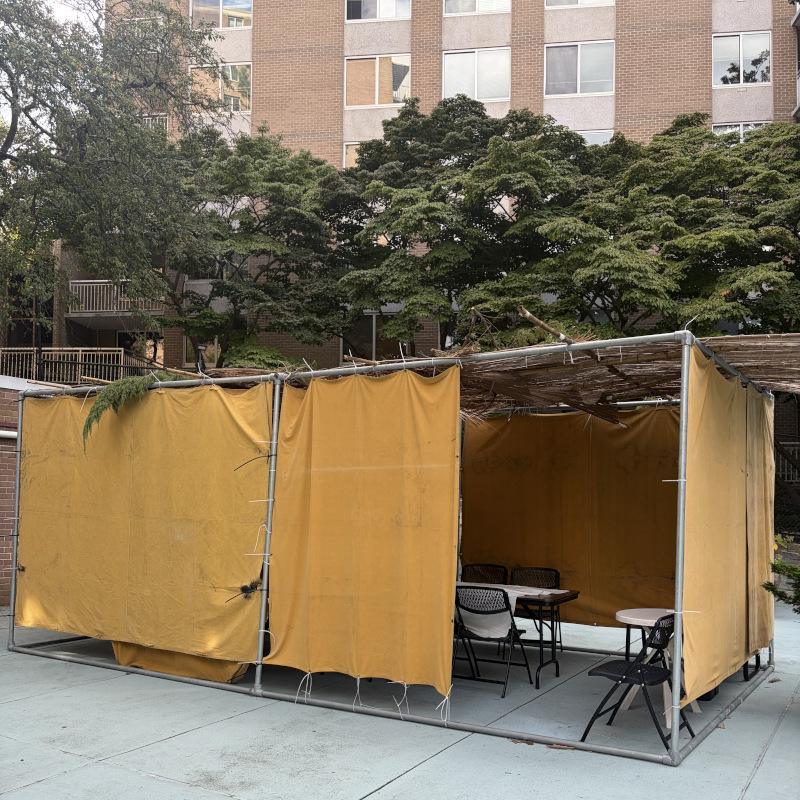
The Van Ness East management is very helpful and supportive, allowing for the use of the pool patio deck as the pool is closed for the season, and more importantly, for the use of a storage area for the sukkah materials including the poles and tarps.
Sukkot, which is after the Jewish High Holy Days of Rosh Hashanah and Yom Kippur, is a seven-day holiday where a temporary hut or “booth” is built with specifications described in Jewish law. One of the main requirements is that the roof is exposed to see the sky.
Historically, it recalls the shelters in which the Israelites lived during their journey through the wilderness after leaving Egypt.
A sukkah’s roof is made primarily from natural materials such as branches or leaves. The sukkah reminds us that our homes and possessions are ultimately temporary. It encourages us to appreciate what we have while recognizing our dependence on God and on the larger community.
Another central mitzvah involves the Four Species—the lulav (palm branch), hadassim (myrtle branches), aravot (willow branches), and etrog (citron). These are held together and waved during prayers. The Four Species are traditionally understood in a variety of ways, including as symbols of different types of people coming together as one community.
Sukkot is also known as Z’man Simchateinu, “the Season of Our Rejoicing.” Unlike the introspective mood of Rosh Hashanah and Yom Kippur, Sukkot emphasizes joy, gratitude, hospitality, and community. Traditionally, Jews welcome symbolic guests, known as ushpizin, into the sukkah, emphasizing generosity and connection with others.
In honor of this holiday at the Van Ness Sukkah, residents host a reception with desserts and beverages which are open to the Van Ness community. These receptions attract people who stop by to hear about the holiday or are curious about the holiday.
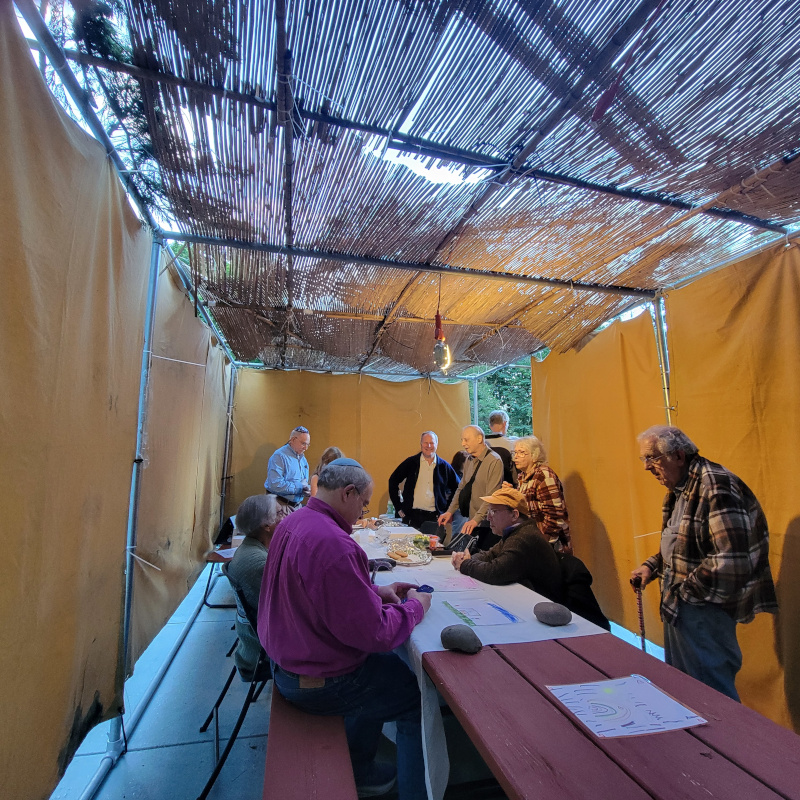
Most of the people who help out with building the sukkah are members of Adas Israel. The Van Ness Sukkah was started in the early 2000s by a former resident of Van Ness East, Brian Foont. Brian arranged with the Van Ness East management for the use of the pool patio and the storage room for the sukkah.
After Brian moved, the sukkah coordinator was Rabbi Charles Feinberg, a Van Ness East resident and associate rabbi at Adas Israel. The next coordinator was another Van Ness East resident, Stuart Cohen, and is currently coordinated by Bill Levenson, a resident of Van Ness North.
Discover more from Forest Hills Connection
Subscribe to get the latest posts sent to your email.