
by Adam Sieminski
My wife Laurie and I have become accustomed to the ever-growing list of critters making the urban landscape their home: the coyotes in Rock Creek Park, foxes in the neighborhood, and more – as Forest Hills Connection has chronicled.
What we were not expecting, after more than 35 years here on Brandywine Street NW, was groundhogs.
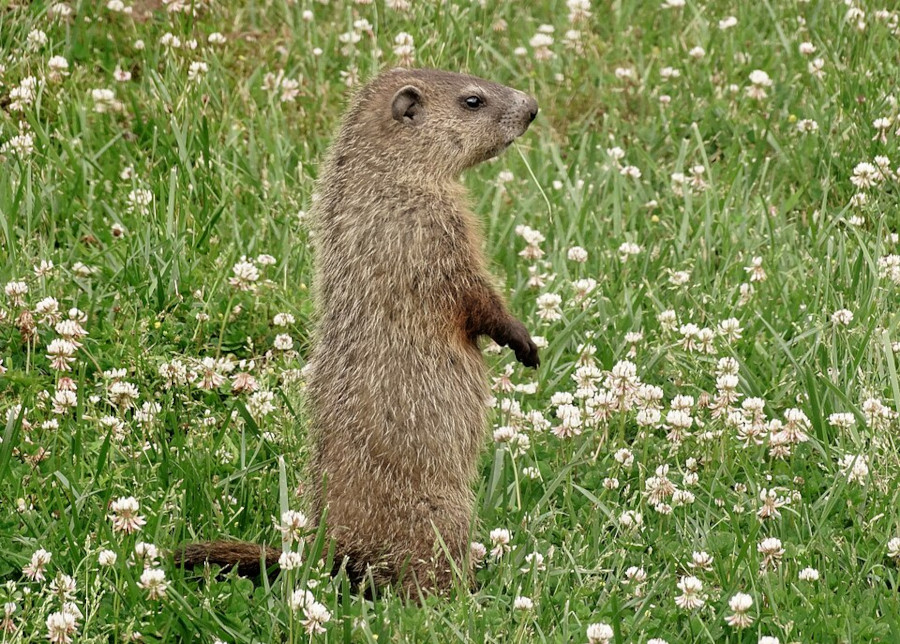

Woodchucks and groundhogs are exactly the same animal: large, burrowing rodents scientifically known as Marmota monax. They are the largest members of the squirrel family.
Laurie, who grew up in Unadilla, New York – home to plenty of countryside woodchucks – saw one on Saturday heading into the woods of Linnean Park at the corner of Fessenden and 32nd. She wasn’t sure that I believed her when she related the sighting.
On Sunday, we were coming home together from an errand, and saw one crossing Brandywine Street. This woodchuck was at the bottom of the steep slope behind Forest Hills Park and the Washington DC International Christian Church — at 32nd Street as it heads toward Albemarle and Soapstone Valley.
In both cases, the animals were moving too fast to get a picture.
Groundhog, Woodchuck, Whistle Pig
The different names simply come from regional folklore and language:
Groundhog: The most common name across the United States, and famously celebrated on Groundhog Day in Punxsutawney, Pennsylvania.
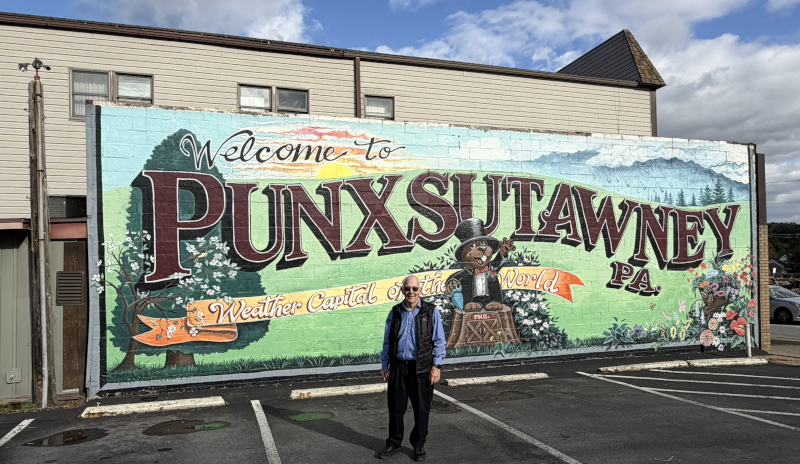
Woodchuck: The name has nothing to do with chucking wood; it is a corruption of an Algonquian Native American word (such as wuchak) which translates to “the digger”.
Whistle Pig: Another popular regional nickname due to the shrill, high-pitched whistle they use to warn other colonies of danger. This term is used often in Appalachia and the rural South, and was famously adopted by a distiller of rye whiskey in Vermont.
Whatever you call them, these stocky herbivores are renowned for their impressive digging skills, binge-eating in the summer, and deep winter hibernation.
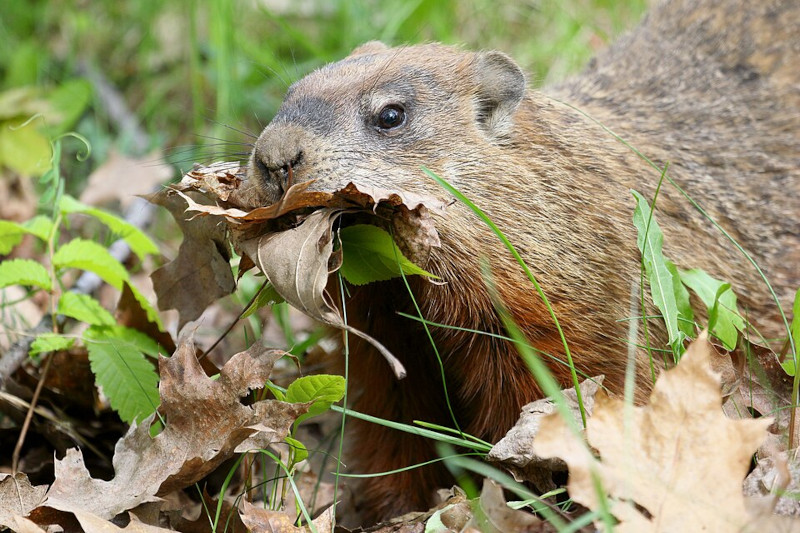
Despite that fact that our sightings were “new” to us, animal experts say they have adapted remarkably well to urban and suburban life and are common residents throughout Washington, D.C. and the surrounding Mid-Atlantic states.
They are known as “edge dwellers” and naturally thrive wherever wooded areas meet open spaces. They are not as good getting into garbage bins as raccoons, but they forage well in residential settings.
In the city, they use green spaces, parks, Rock Creek Park, and landscaped yards as feeding grounds, while substituting manmade structures for their natural dens.
Instead of forest or farm burrows, urban groundhogs frequently excavate tunnel systems under human structures like concrete foundations, porches, sheds, and decks. They rely on residential gardens, flowerbeds, and clover patches to fatten up for their winter hibernation.
Because they are primarily active during the day, groundhogs are highly visible in city greenways, making them a common — if occasionally destructive — part of the District’s ecosystem.
Finally, Laurie can do a pretty good version of the woodchuck tongue-twister:
“How much wood could a woodchuck chuck, If a woodchuck could chuck wood? As much wood as a woodchuck could chuck, If a woodchuck could chuck wood.”
Researchers say that ditty came from a 1920 song written for a Broadway musical, and not Mother Goose. Neighbors can try to commit this to memory if they are so inclined and we can have a contest at the next Forest Hills block party.
Discover more from Forest Hills Connection
Subscribe to get the latest posts sent to your email.