
by Anthony Dobranski
A month ago I announced the development of a serial mystery novel to be published in these eminent pages, and set in the Forest Hills of 1942. Since then I’ve been hitting the books – and the links, and the archives.
Historians Ann Kessler and Anne Rollins kick-started my work during a pleasant morning at Anne Rollins’s home, touching on everything from the sudden influx of war workers to the local grandees behind Forest Hills playground to war materials drives at Murch Elementary. Ann Kessler’s articles in the Forest Hills Connection were also very helpful, and Susan Davidson was kind to offer her personal reminiscences of neighbors past.

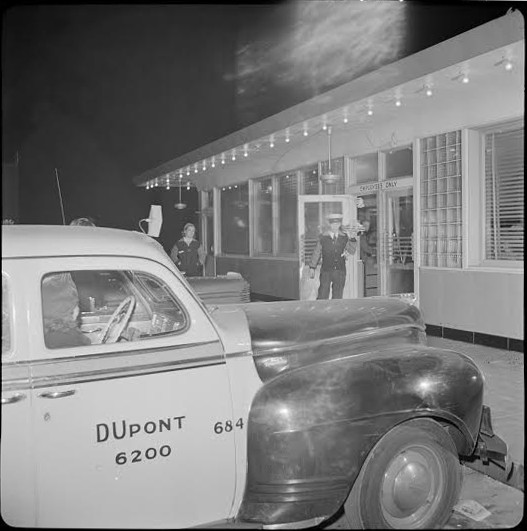

Ann Kessler guided me through the wealth of paper material in the Washingtoniana collection at the Martin Luther King Library: articles by literary luminaries like John Dos Passos; real estate atlases; and the hugely instructive daily-life details in “Jane’s Journal,” a daily column from the 1942 Times-Herald about the life of a fictional “government girl,” one of tens of thousands who came to Washington to support the war effort.

Keith Martin, librarian at the National Institute of Standards and Technology (NIST), sent me over twenty oral histories by scientists of the era, along with maps and images of the former Forest Hills National Bureau of Standards campus. Of course I am also relying heavily on the NIST’s own history, available on its website.

My dear friend Geoffrey Kabaservice, a noted historian of 20th century politics, gave me many pointers. My writing group, the Cat Vacuuming Society (named in honor of how far writers go to avoid writing), has been a great sounding board for my plot and character ideas, in particular my colleague Laura Henriksen.
My final guide is no longer with us – the eminent journalist David Brinkley, who wrote a marvelous and often hilarious popular history, Washington Goes To War (sadly out of print, but easily available used). Every time I think up what seems an outrageous fiction, in his pages I find an even stranger truth.
And, a huge thank you to the great anonymous numbers of historians, hobbyists and merchants behind the Internet. I can’t imagine how people did research without it. Just surfing through eBay’s World War II Home Front listings brings the past to colorful life, from Son-in-Service rings to ration books to wind-up “War Alarm” clocks made of cardboard.

I bought one of those clocks, by the way, still keeping time after 70 years — and it’s loud!
Discover more from Forest Hills Connection
Subscribe to get the latest posts sent to your email.