
by Matthew Pavesich
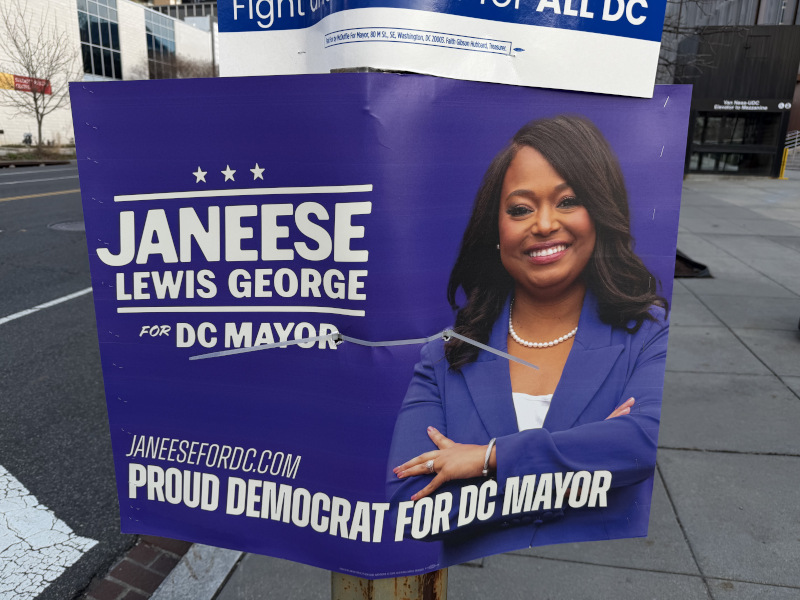
To live in Forest Hills and the surrounding neighborhoods during an election season is to spend months traversing city blocks inundated with campaign placards, lawn signs and stickers. And while we surely all saw these signs during the primary season, you might not necessarily have noticed one thing shared by almost all of them: their use of the D.C. flag.
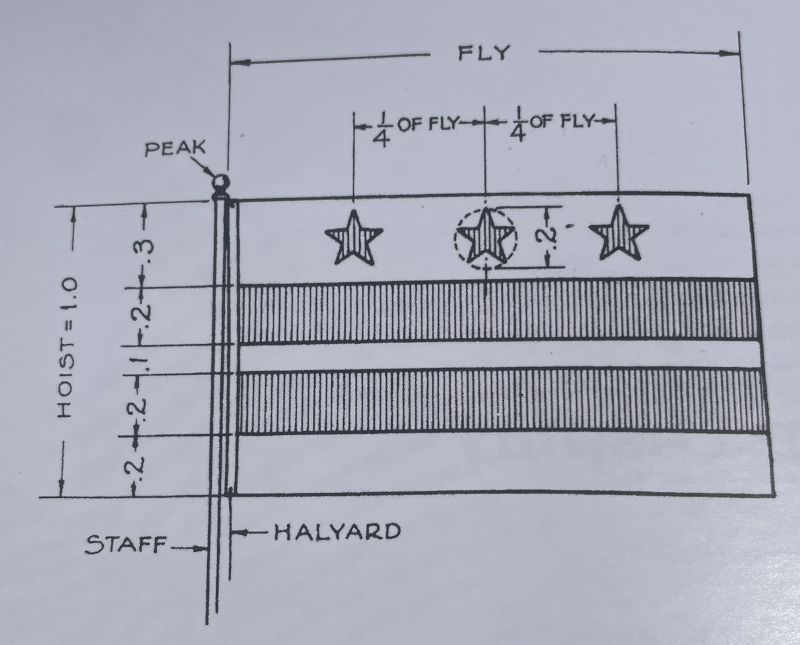
Curiously, though, they don’t use the easily recognizable three red stars and two red bars of the official flag.
Campaigns remix the stars and bars in as many different ways as there are candidates: with different colors, by rearranging the stars and bars, and more.
I document these remixes of the D.C. flag in a project called DC/Adapters (dcadapters.omeka.net). Not just those on political ads, either, but in all sorts of artwork and advertisements all over the District.
DC/Adapters has three origins, in a way. It started one day in February of 2013 at Union Market, when I noticed several food stalls and vendors that used the D.C. flag in some way in their signage.
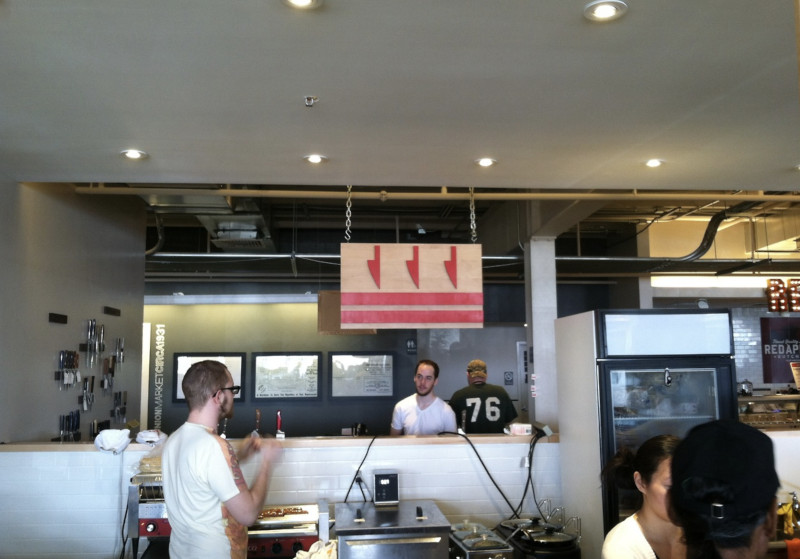
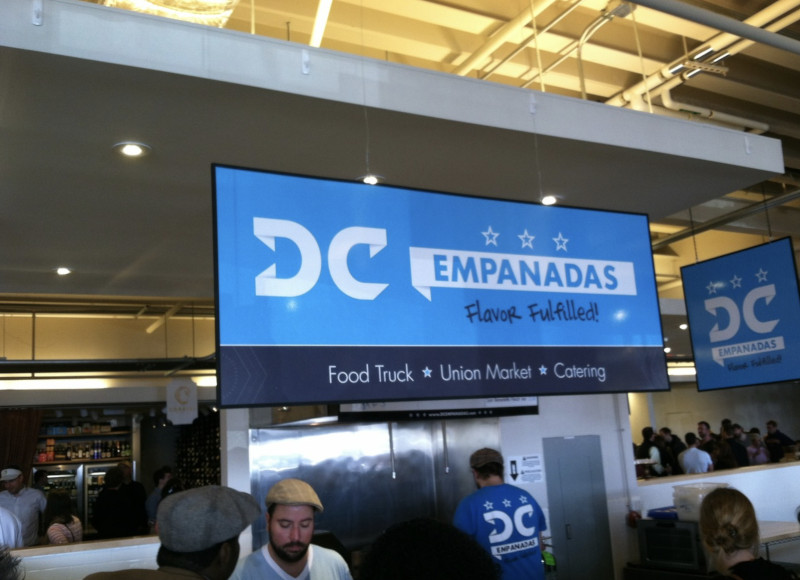
Since then, I’ve documented every remixed flag I’ve seen around the District.
This project started even earlier, when I moved here in 2011 from Chicago and noticed immediately similarities between the two city’s flags. Both feature stars, bars, and the color red.
And the origins of the project emerge from my work as a scholar of rhetoric and writing at Johns Hopkins University, in which I study and teach visual rhetoric, systems of communication, and everyday writing. My work primed me to observe the local acts of creativity with a certain lens.
I’ve run DC/Adapters since 2013, and as of September 2026, I’ve identified 1,390 unique examples of D.C. flag remixes. These acts of creative visual communication include commercial advertising, political persuasion, and murals. Over time, I’ve come to think of these individual expressions as a complex system of communication, something almost like a barometer of life in D.C.
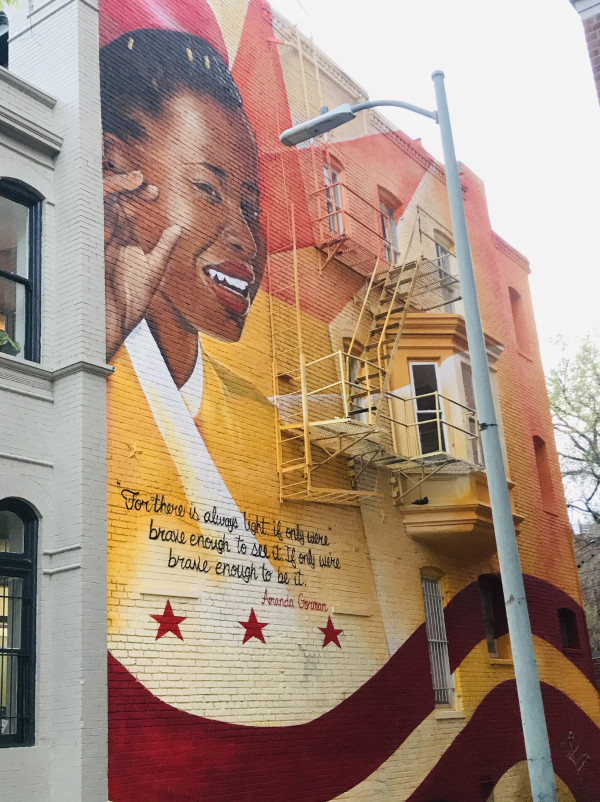
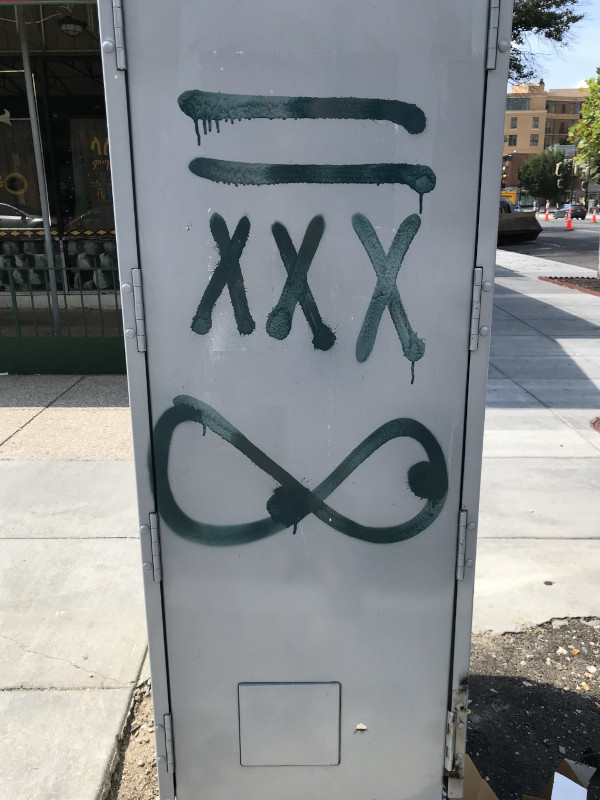
Like I said above, the visual landscape of the city reflects the wild explosion of political debate during campaign season, but I’ve also found, for example, that the densest collections of flag remixes occur in the neighborhoods that have seen the most gentrification over the last 20 years or so – Columbia Heights (where I used to live), Shaw, and down by Union Market, for example.
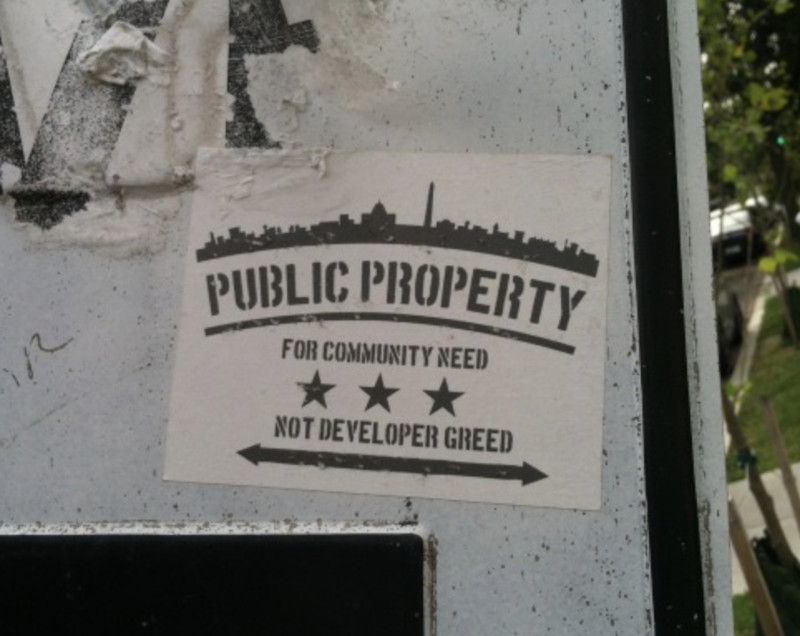
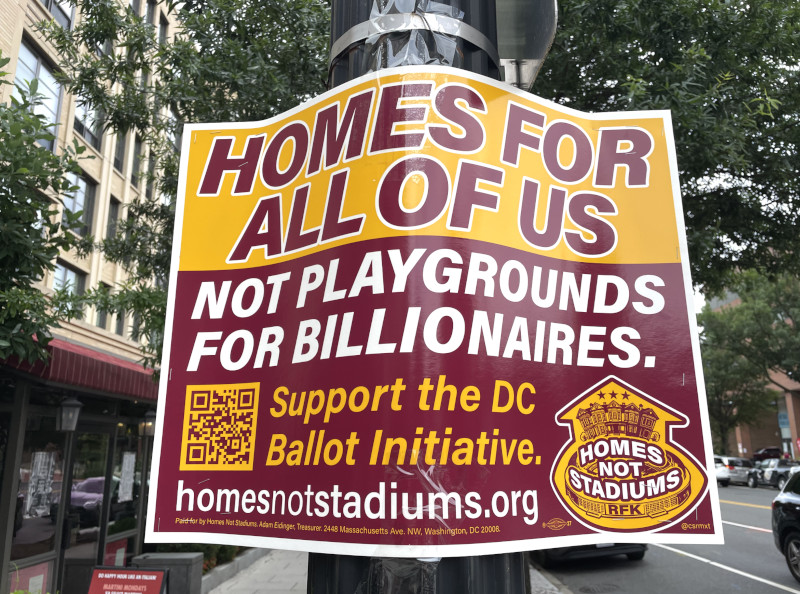
The forces of gentrification, like real estate developers and big box stores, and those who resist it, like local residents and activists, could be using our flag to argue for their vision of our neighborhoods’ futures. Just like Democrats and Republicans, flag adapters are using the same language in deeply different ways.
It’ll come as no surprise that the last year or so has seen a rise in flag remixes commenting on the second Trump administration, the presence of the National Guard, and the rising Free DC movement. In fact, my summer research assistant, Maddie Vahey from Georgetown’s public humanities master’s program, put together a special exhibit of these particular designs.
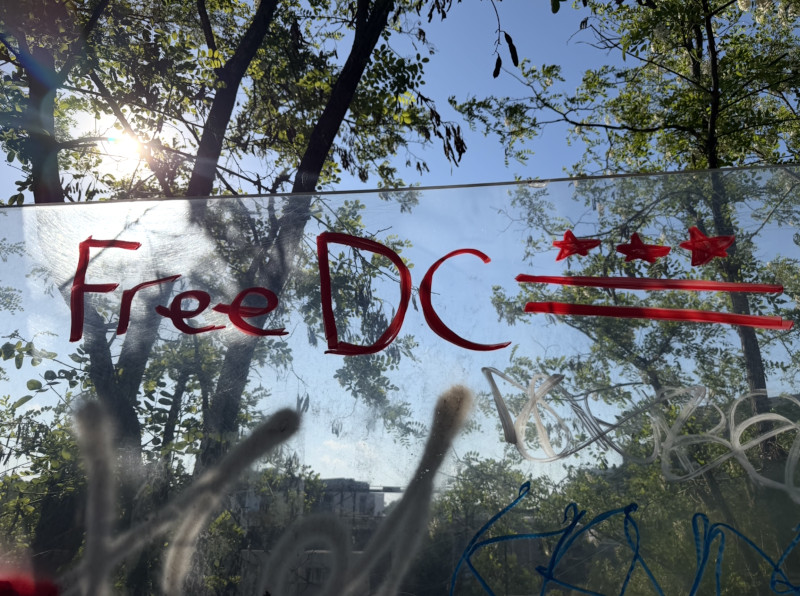
Calls for D.C. statehood using the flag aren’t new, of course – they’re some of the very first flag remixes I found back in the mid-2010s – but there’s been a notable uptick in recent months.
Local history buffs might be interested to know that the D.C. flag has often been embroiled in local politics, including at its adoption in 1938. Charles Dunn first designed the flag in the 1920s, but Congress only adopted it in 1938 as a response (and rebuttal) to a local referendum that year calling for D.C. self-governance and congressional representation.
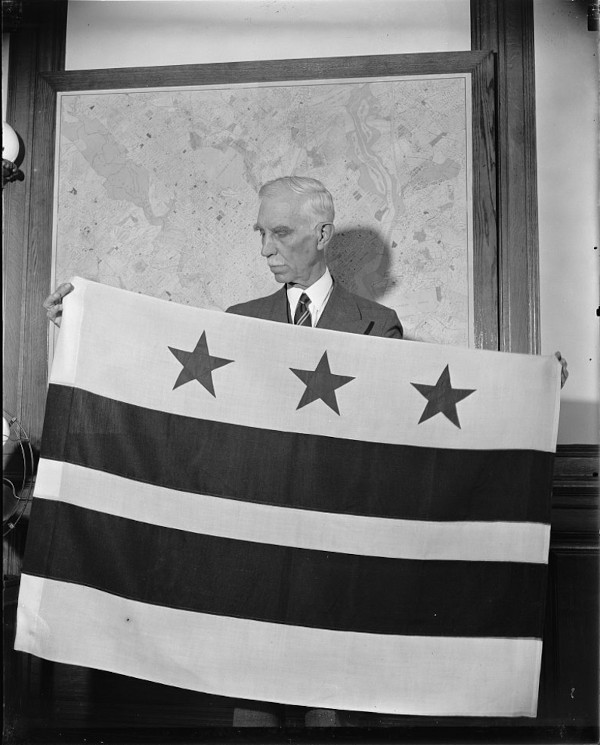
We still lack the latter, of course, and Congress wouldn’t grant us the former for decades … but they gave us a flag. Folks in 1938 weren’t impressed.
Letters to the editor from the time, which I found in the D.C. History Center archive, saw the new flag as a patronizing pat on the head. Further, some saw the flag, which is based on George Washington’s family’s coat of arms, as heraldic and therefore inappropriately smacking of royalty. For more on this contentious story, I recommend Chis Myers Asch and George Derek Musgrove’s sweeping history Chocolate City (2019) and my own much more modest article in Washington History (Vol. 30, No. 2, Fall 2018).
To explore the full collection of remixed D.C. flags, including a number of special exhibits and an interactive map, check out dcadapters.omeka.net. And for those interested in diving a bit deeper, you can do so in a few ways. First, keep your eyes peeled for remixed D.C. flags, and submit your findings through the website. You can upload photographs – and please make sure to note the location!
Also, I’ve developed a creative workshop based on flag remixing, so reach out if you have a group that would be interested in learning more and participating in flag remixing – especially in support of D.C. statehood! I can be reached through the DC/Adapters website and at dcadapters@gmail.com.
Discover more from Forest Hills Connection
Subscribe to get the latest posts sent to your email.
What fun—thank you! Clearly a successful original design that can be adapted in so many ways and still retain—however remotely—its meaning and connection to our city.