
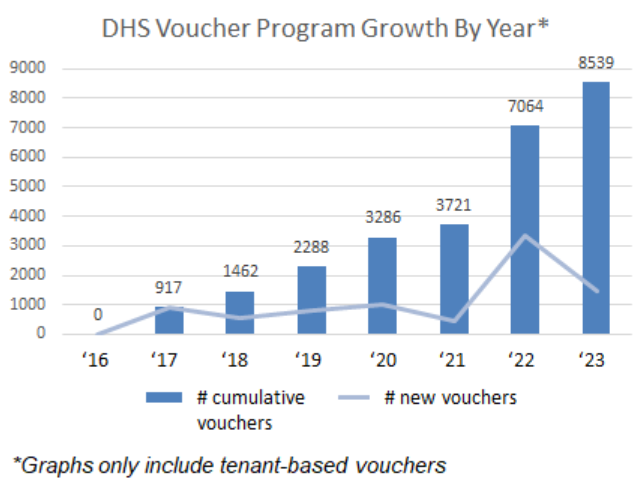
More than 7,000 DC residents were housed under DC Department of Human Services (DHS) programs for the homeless as of September last year.
The figure is from the DHS report “A Path to Ending Homelessness,” which chronicles growth in the agency’s voucher programs since 2016.
“Over the past two years, the District has expanded its housing voucher program for people experiencing chronic homelessness by more than 100%,” said the report. Under the U.S. Housing and Urban Development definition, the chronically homeless have been continuously unhoused for a year or more, or four times in three years. They also struggle with one or more of the following conditions: substance abuse, mental illness, and physical or developmental disabilities.
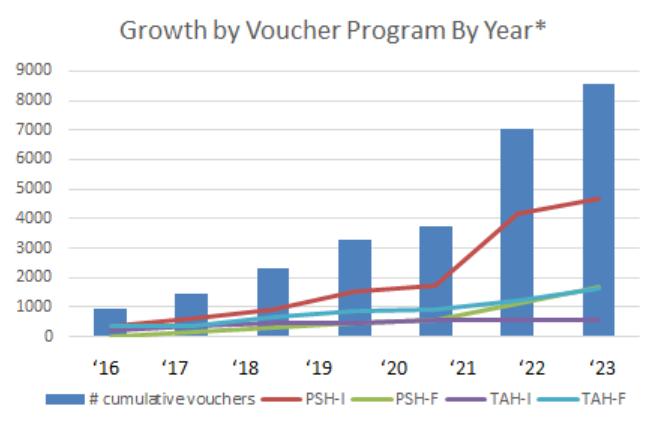
DHS administers two programs: Permanent Supportive Housing (PSH) and Targeted Affordable Housing (TAH). Those are further broken down into services for individuals and for families.
The PSH program serves people who have been chronically homeless. Such renters need intensive services – which they can refuse – but caseworkers must check in at least twice a month, at least one of those times in person.
The DHS voucher holders in the TAH program are a much smaller group. They do not need such intensive services, and only quarterly check-ins are required.
The DHS report notes that these two programs accounted for one third of the 20,000 residents housed through DC voucher programs by the end of calendar year 2022. The Department of Behavioral Health Services (DBHS) also provides permanent supportive housing to the previously unhoused. (DBHS and voucher renters from other DC programs were not included in the DHS report.)
Ward 3 tenant leaders have been seeking building-by-building data on voucher renters since 2017, when larger DC rent subsidies led to an influx in Ward 3 apartment buildings. One of their chief concerns is that residents in the PSH programs are not getting behavioral health and other services they should be receiving, or that residents who need far more intensive supervision are being placed without enough assistance. They believe that has contributed to an increase in threatening behavior and assaults on residents and staff.
They have also documented increases in noise and domestic disturbances, and more police calls. In 2021 and 2022, MPD referred four Van Ness apartment buildings to the DC attorney general’s nuisance properties division.
“It is next to impossible to get a complete picture of the huge growth in the use of housing vouchers in our neighborhood,” said Harry Gural, the president of the 3003 Van Ness tenants association. “The Bowser administration has provided only partial data. The DC Housing Authority has repeatedly rejected requests for data.”
Gural and other tenant leaders have done some additional data collection of their own. Long before the HUD audit of DCHA, they found evidence that DC was overpaying many of the landlords receiving rent subsidies.
“The public deserves to have substantial, accurate information about the city’s housing voucher programs,” Gural told Forest Hills Connection.
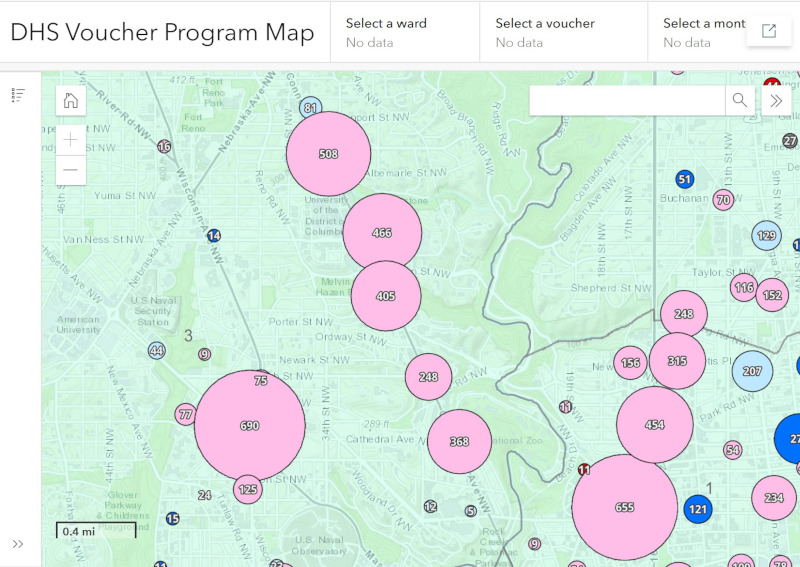
When Forest Hills Connection first started digging into “A Path to Ending Homelessness,” we intended to include data from the accompanying “DHS Voucher Program Map” (see the screenshot below), which seems to drill down into neighborhood-level voucher numbers. But we discovered discrepancies. The first version of the map showed 36,000 total voucher renters in the District, which did not match the 22,000 figure in the report. DHS responded to Forest Hills Connection’s request for clarification by notifying us that it had adjusted the map data. It now shows about 3,400 voucher renters DC-wide, another figure with no match in the report. The agency did not answer our initial questions about what the numbers on the original map represent. On Tuesday, June 6th, we sent DHS additional questions about the old and new map data and are awaiting its response.
Discover more from Forest Hills Connection
Subscribe to get the latest posts sent to your email.