
In late June, I spotted a bug I had never seen before. I was hiking in Rock Creek Park on the Western Ridge Trail.
The insect was red, with white dots on its wings. It flew away before I could get a photo. But hiking in Soapstone a few days later, I saw another:
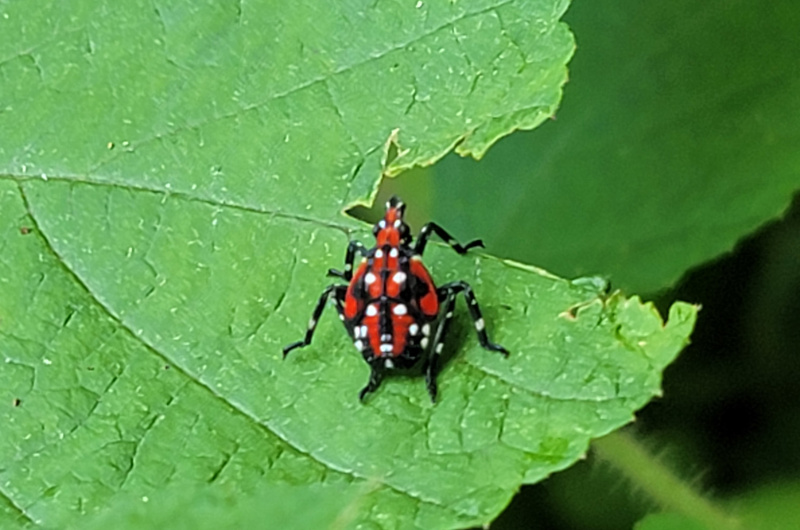
And on July 4, surprise of surprises, I saw one on my living room couch.
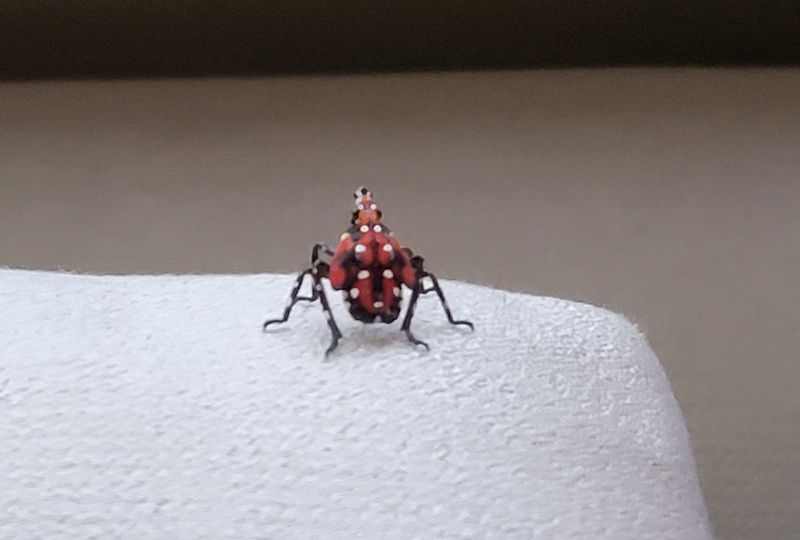
I told myself that I really needed to find out what this bug was.
At the suggestion of a friend, I tried iNaturalist, a free plant and animal identification app that connects experts and citizen scientists. I took a photo of yet another red-spotted insect crawling on a chair on my deck.
In not more than a second, I had my answer: a lycorma, or spotted lanternfly. Investigating further, I found that what I was seeing was the insect in its later nymph stage. (It is black with white spots in its early nymph stage.)
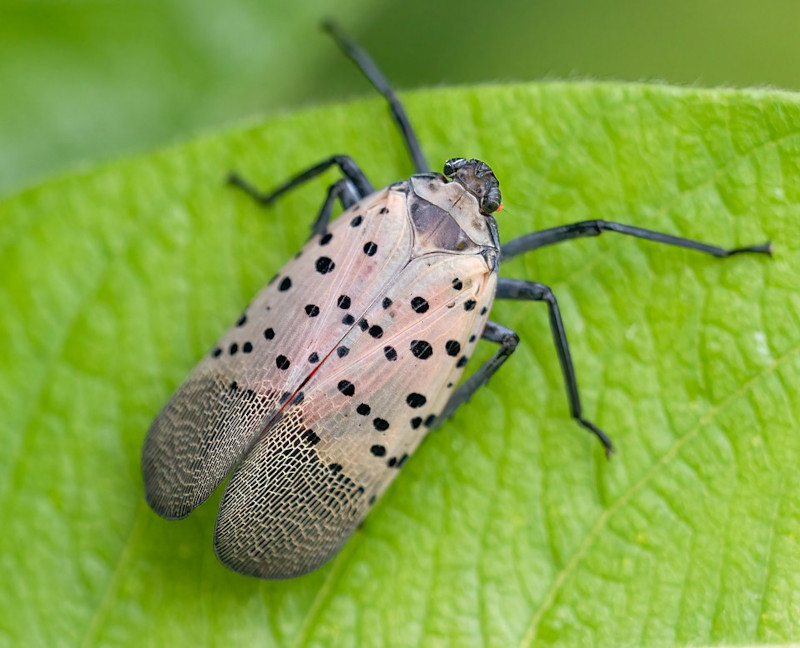

Native to south and southeast Asia, the spotted lanternfly was first seen in the U.S. in 2014. It feeds on sap from all kinds of plants and trees, but is particularly drawn to grapes, hops, stone fruits, hardwoods, and its preferred host tree: the tree of heaven, which is also an invasive species. As the spotted lanternfly feeds, says the USDA, the bug excretes a sticky sugary fluid that causes a sooty mold, similar to aphid excretions.
How much should those of us in DC worry about this insect? The spotted lanternfly gets first billing on a Montgomery County Department of Environmental Protection Agency list of pests that bother trees, but given their preferred sap sources, they are more of a threat to agriculture than to our local forests.

As for what we can do about the unwanted bugs, local governments have been telling us to kill them on sight. The 51st advises taking the fight to the tree of heaven.
And other efforts are afoot. About a week after my first lanternfly nymph sighting, I was reading the Sunday New York Times. On the last page of the Opinion section was an article titled “A Plague of Pests Coming for California.” Yep, lanternflies.
But the headline was deceptive. The article was really about biocontrol, or using pests’ natural enemies against them. One example is a parasitic wasp, native to the Mediterranean, brought in to control the ash white fly attacking citrus trees in California. Some biocontrol efforts have created bigger problemsm, so this is a learning experience for all of us, scientists included. Hopefully there will be funding to continue the research necessary for such efforts.
Discover more from Forest Hills Connection
Subscribe to get the latest posts sent to your email.