
After rain falls, where does it go? Sometimes our yards get too soggy, our basements flood or sump pumps rev into action. After last summer’s soaking, new springs burst forth which flowed down our sidewalks and streets. But a great deal of it is collected and poured directly into the streams that surround us, and if you hike by the restored Linnean and Broad Branch streams, or to the original Broad Branch, Soapstone, Melvin Hazen and Rock Creeks, you see signs of flooding and erosion. Excess runoff also pollutes our rivers and streams and in the most extreme cases, endangers pedestrians and drivers.
So let’s look at how we handle the rainwater that slips off of buildings, streets and sidewalks and doesn’t water our trees and plants and enter our groundwater supply.
Much of the rain that falls on the District’s 17,137 acres of impervious surface are routed into a drainage system called the stormwater sewer. In our part of DC, the stormwater system is separate from the system that carries sewage from our homes. This rainwater system consists of downspouts, streets and sidewalks, catch basins, underground pipes, above-ground engineered waterways such as Linnean Stream, channels like the one that runs next to the 2800 block of Davenport, and creeks such as Broad Branch and Soapstone where drainage pipes dump the water.
Yes, many of our streams and creeks are part of the drainage system – by design. We value our streams, and do not often think of them in this way. Take a look at the system that drains into Soapstone Creek.

Most of the stormwater flowing into Soapstone Creek pours through on outfall at Albemarle Street and Connecticut Avenue after being collected from a 314-acre area west, south and north of this outfall. The rest of the stormwater comes from 105 acres of direct drainage into Soapstone Creek. An example of the above surface drainage from our sidewalks and roadways can be seen coming from Connecticut Avenue, 32nd and 30th Streets and gathering at the catch basins at 32nd and Albemarle. All this water is being dumped directly into Soapstone, carrying organic and inorganic pollutants and sediment.
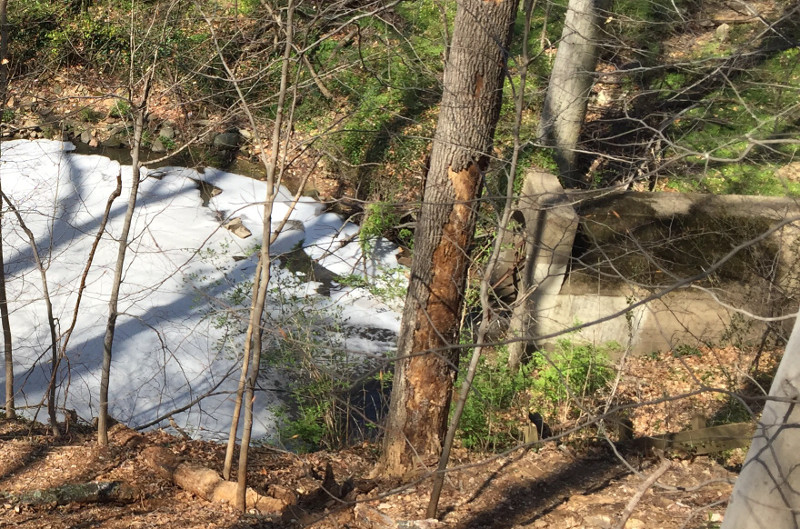
What happens in our neighborhood when DC gets more rain than the annual average of 39.75 inches? In 2018, 66.28 inches fell. After some storm events, catch basins and creeks overflowed, and streets flooded. Remember when Broad Branch Creek became a roaring river, trapping drivers? And the woman who fell trying to cross Albemarle Street in rushing knee-deep water?
There’s something we can do about it. The District Department of Energy and the Environment (DOEE) is working to retrofit public buildings, parks, streets and sidewalks with green infrastructure. Jeff Seltzer, the head of DOEE’s Natural Resources Administration, will tell us more about its efforts in a follow-up article tomorrow. (See “Green infrastructure can be used to restore the District’s waters”)
Private property owners have a role to play as well. Whether we live in an apartment building or single-family home, the DOEE sees us as partners in its efforts to capture and control rainwater before it gets into the stormwater sewer system. This includes replacing impervious surfaces like driveways and patios with permeable surfaces, planting trees, and installing rain barrels and rain gardens. Or, asking apartment landlords, local businesses and houses of worship to check out the District’s RiverSmart Communities grant program.
Discover more from Forest Hills Connection
Subscribe to get the latest posts sent to your email.